






GreenInCities
How do we imagine the future of urban green?
What role do we envision for local communities, social groups experiencing systemic vulnerabilities, and non-human life in shaping this future?
GreenInCities is an EU-funded Horizon Europe project focused on implementing regreening and re-naturalisation interventions in 11 European cities, enabling all forms of life, both human and non-human, to coexist and thrive. By recognising the interdependence between people, flora, and fauna, the project seeks to develop caring and innovative solutions that support the well-being of urban ecosystems as a whole.
Through a co-creation methodology applied across all project phases, GreenInCities works with local communities and technical partners to co-design urban green spaces that are inclusive, climate-resilient, and multifunctional. Particular attention is given to groups that are often excluded from urban planning or are disproportionately affected by climate change, including children, older adults, women, and people with a migrant background.
The 11 participating cities include 5 Leader Cities: Athens (Greece), Barcelona (Spain), Helsinki (Finland), Prato (Italy), Nova Gorica (Slovenia), and 6 Follower Cities: Birštonas (Lithuania), Cork (Ireland), Hersonissos (Greece), Matosinhos (Portugal), Pécs (Hungary), and Reykjavik (Iceland).
As part of the GreenInCities methodology, the following activities take place across all cities:
- Co-analysis activities focusing on the use of public spaces, flora and fauna, the environment, and resilience.
- Co-design activities to develop Nature-based Solutions (NbS) that respond to the needs of different local communities.
- Research on gendered impacts of the environmental crisis and environmental ethics.
- Regreening and re-naturalisation interventions to enhance biodiversity, social cohesion, and quality of life.
- Co-evaluation activities before and after the interventions to measure their social and environmental impact.
URBANA’s contribution
Within this broader approach, URBANA contributes to GreenInCities through three interconnected areas: ethics, inclusion, and gender-responsive urban planning.
As Ethics Overseer, the team supports a shared understanding and integration of European societal values across project activities through the development of the GreenInCities Values and Ethics Handbook (D1.7).
URBANA also developed the project’s Inclusion Plan (D7.4), providing tools and methodologies to support inclusion and gender perspectives across co-creation processes. Through capacity-building and knowledge-sharing activities with the cities and project partners, the team supports the integration of inclusive and gender-sensitive approaches into urban planning and regreening strategies.
The interventions in Athens provide an example of how these ideas can translate into practice.
Profitis Ilias Park in Rizoupoli
In Athens, URBANA was responsible for coordinating the co-creation process for the pilot intervention at Profitis Ilias Park in Rizoupoli. Through workshops with local residents, older people, local associations, students from nearby schools, parents and caregivers, and municipal representatives, participants developed a shared vision for the future of the park.
The process highlighted the need to transform the park from a transitory space into a vital, safe, and accessible place for everyone: a space where older adults can socialise, children of different ages can play, and parents and caregivers can rest, while also supporting local biodiversity, including the park’s stray cats.
"We want a café-kiosk for all and a pétanque for older people to play and socialize"
"We don’t like the playground because it is designed only for younger children. There is no space for us older kids to play"

URBANA synthesised and co-prioritised the proposals in collaboration with the local community, using GreenInCities decision-making tools. The result was the first version of the park’s Intervention Plan, aiming to create a greener, more vibrant, and welcoming park that supports biodiversity and everyday use.
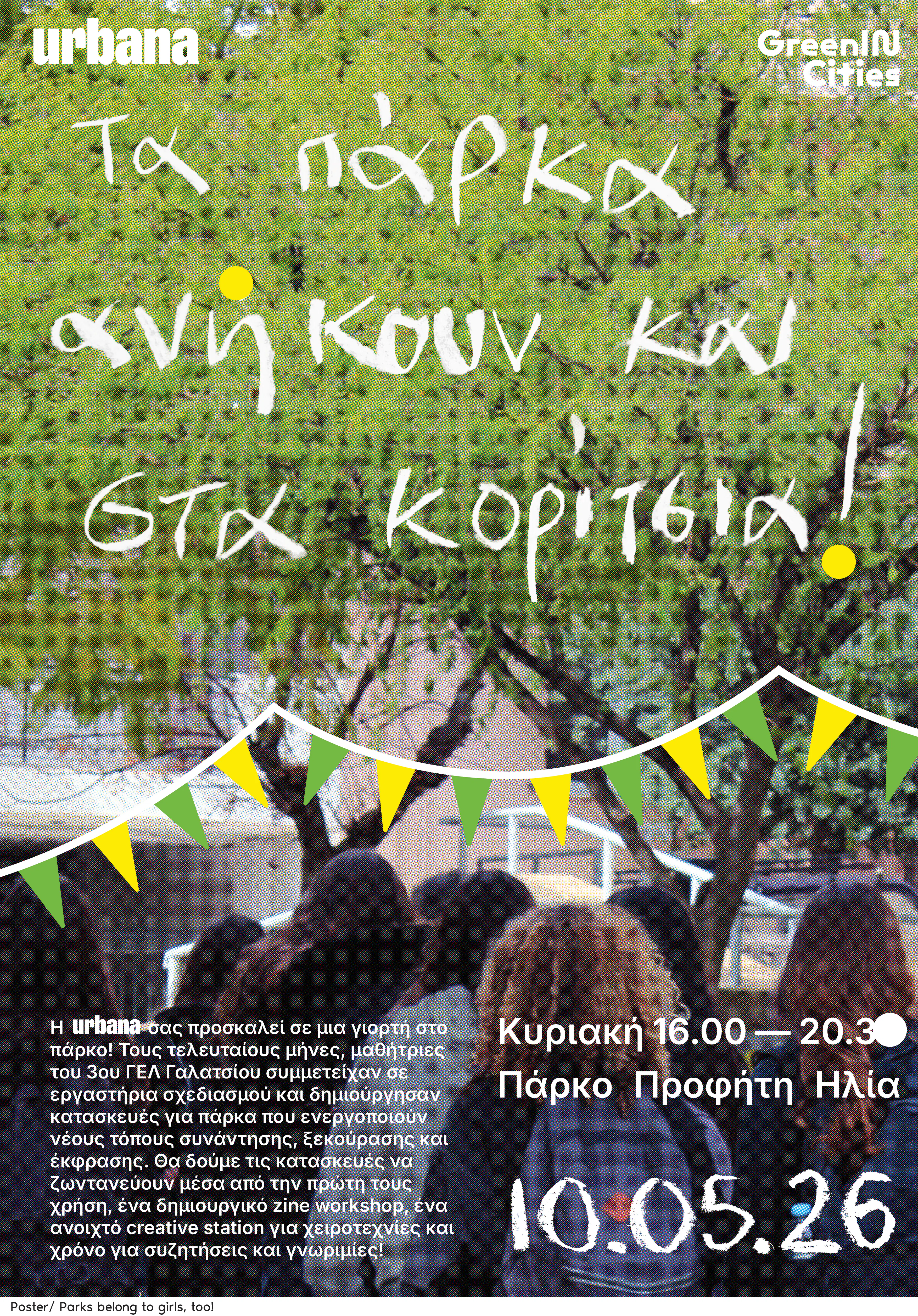
Parks belong to girls too!
The co-creation process raised a broader question: who feels comfortable and welcome in public space, and does it respond to their needs and experiences? As part of the GreenInCities activities at Profitis Ilias Park, URBANA organised a series of participatory workshops with teenage girls from the neighbouring 3rd High School of Galatsi, a group that is often overlooked in the design and use of urban parks. The aim was to co-design and co-construct a temporary intervention responding to their needs and experiences.
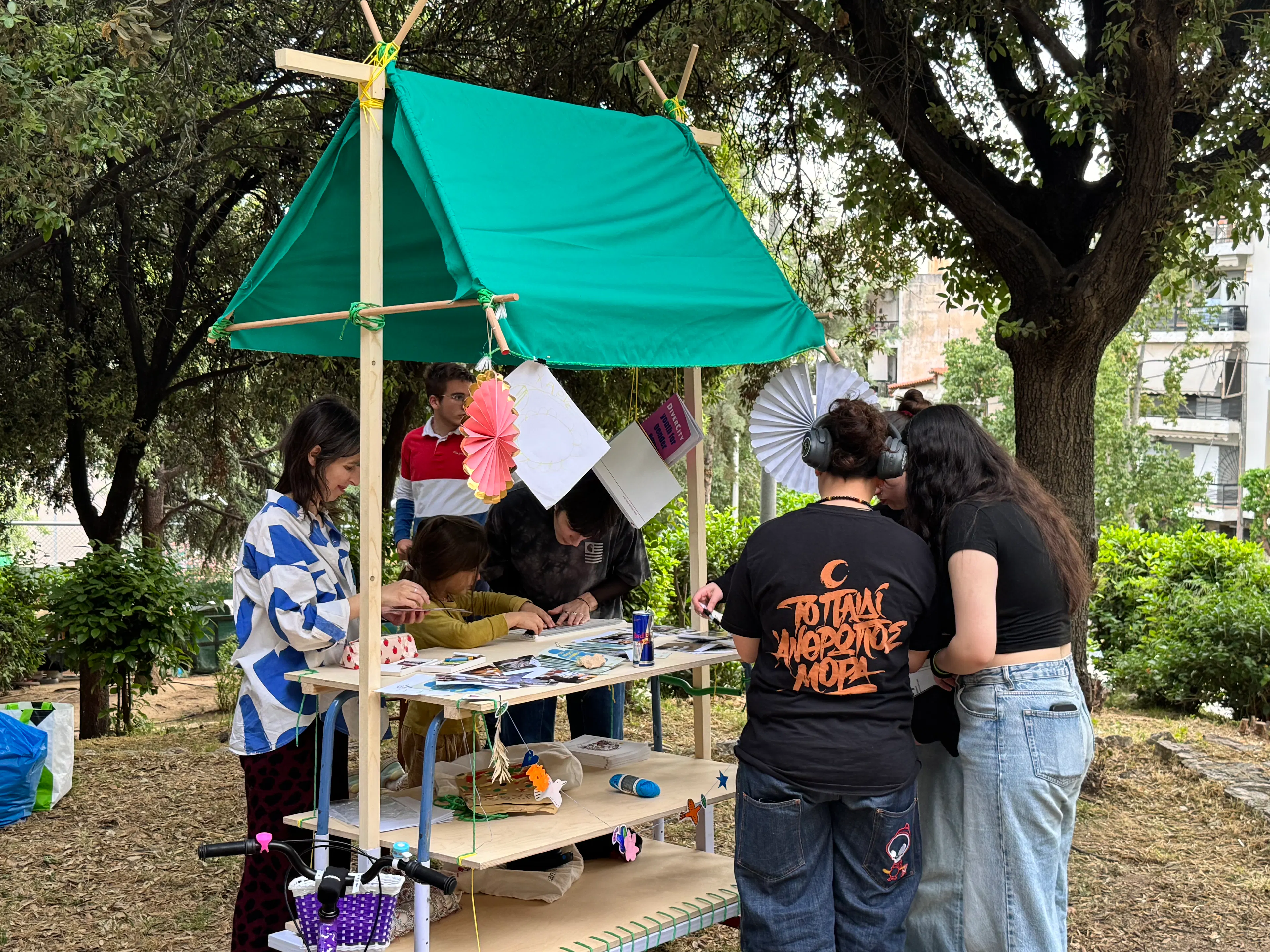
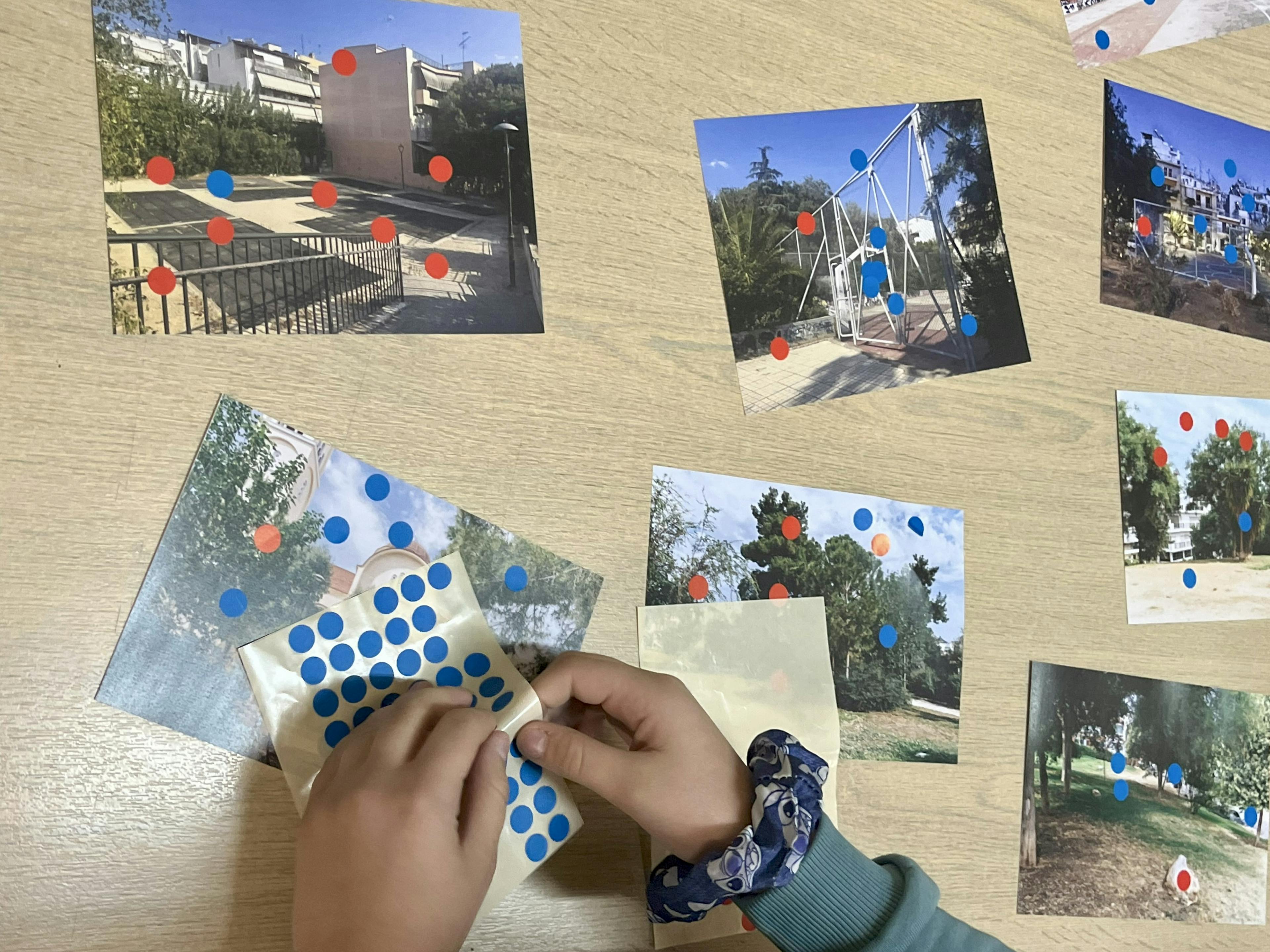
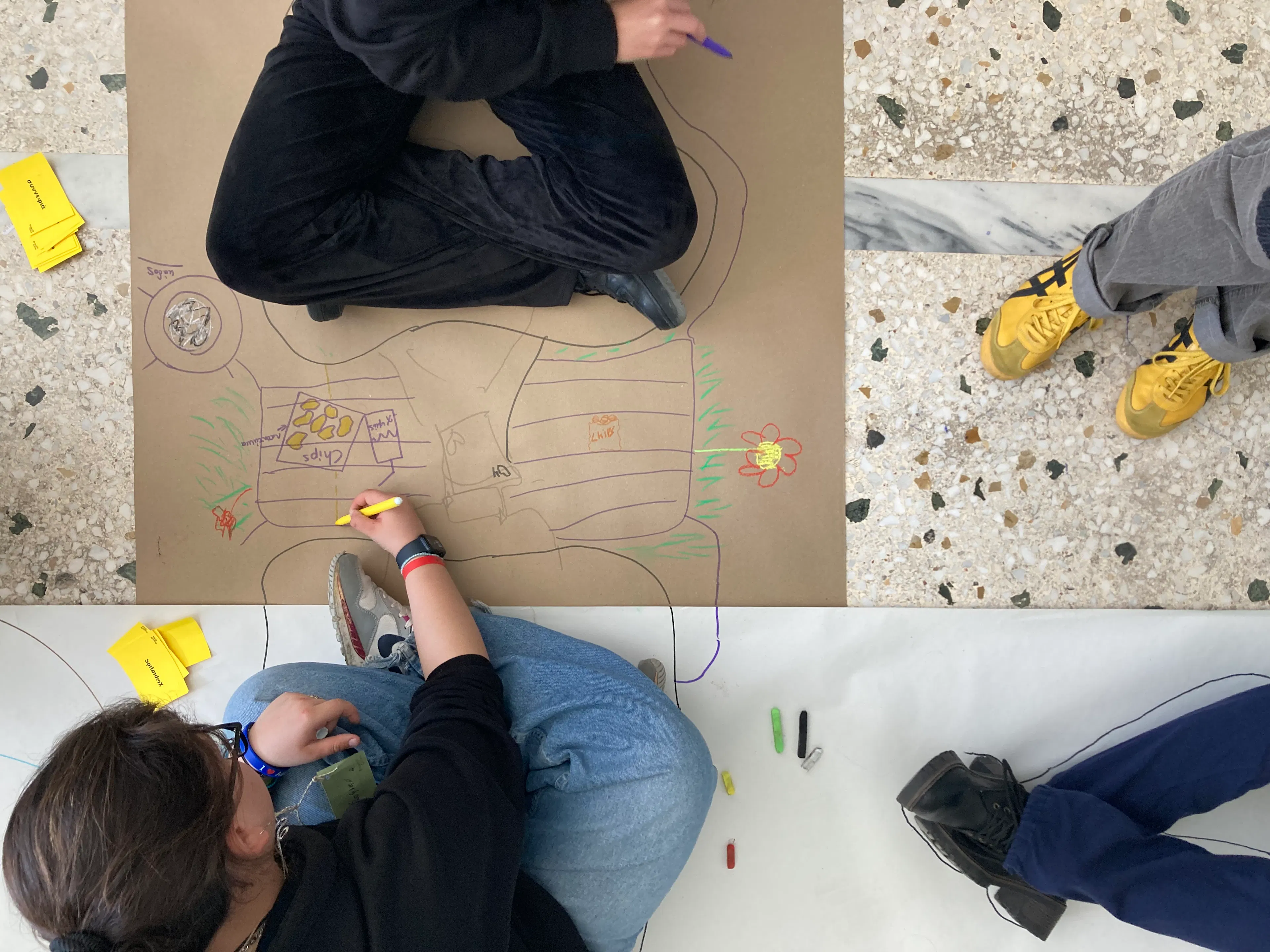
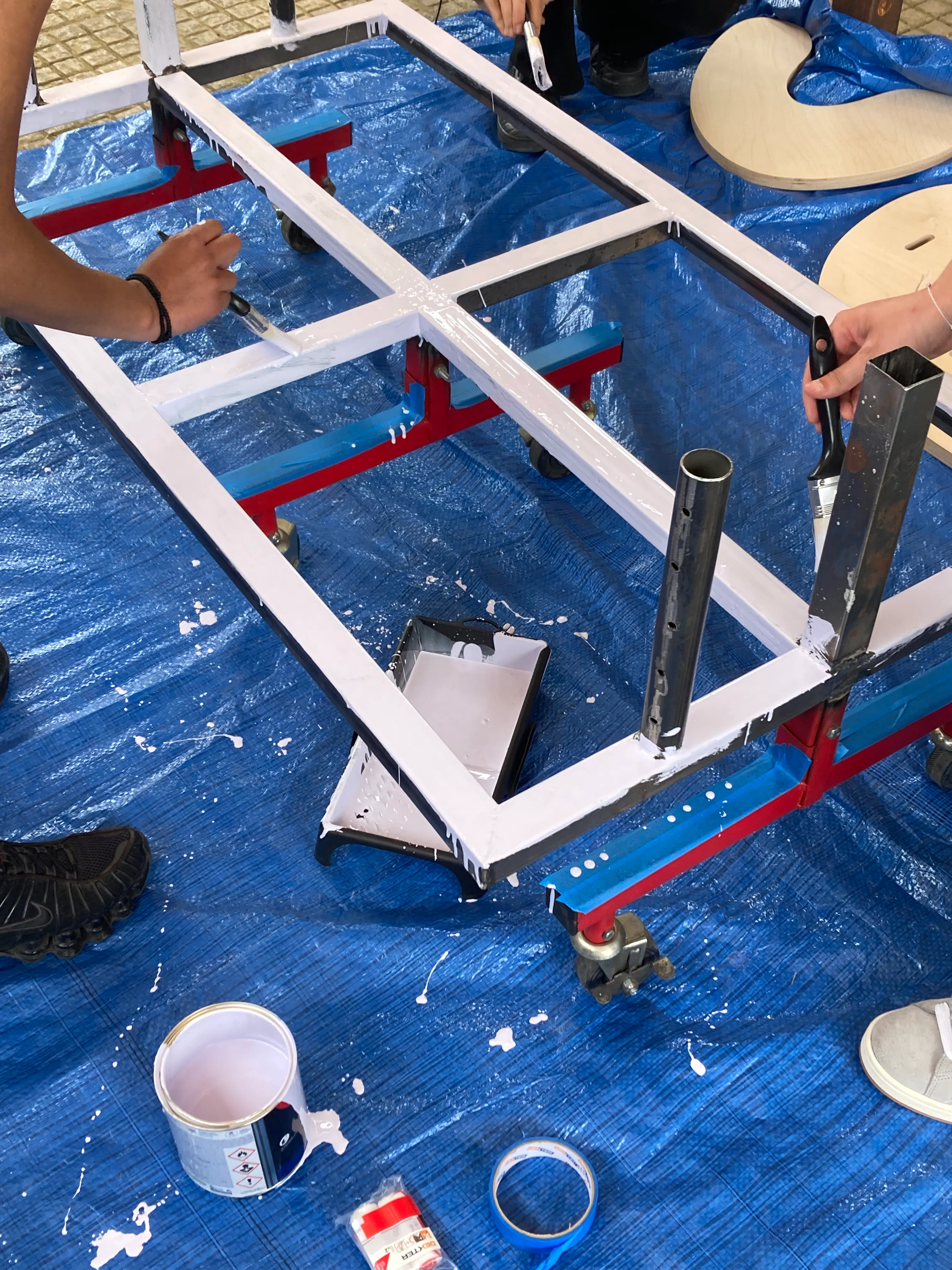
Through creative and hands-on workshops, participants shared their experiences of public space, explored and mapped the park through photography, texture mapping and cognitive maps, and transformed their ideas into sketches, models and collages. They then took part in co-construction workshops involving woodworking, cushion-making, shading structures and painting, bringing these ideas into physical form. The process resulted in the creation of a multifunctional trolley and seating elements for the park, developed in collaboration with the students.
The process concluded with a celebration in the park, where the new structures activated the space through creative activities involving the students and the local community.
A short booklet featuring photographs, reflections and key insights from the process will be available soon. Stay tuned!

Co-caring design strategies
In the spirit of GreenInCities and its recognition of the interdependence between people, flora, and fauna, URBANA is exploring how the design of urban green spaces can respond simultaneously to the needs of women and femininities and to the well-being of non-human life.
The research brings together two fields that have largely been studied separately: gender-sensitive design of urban green spaces and design approaches centred on the well-being of non-human beings. Through literature research, URBANA examines where the needs of these two groups may compete for the same space and how design can help address these tensions.
The research focuses on four key themes: visibility, lighting, sound, and maintenance. For each, it explores potential design strategies that can enhance the safety and well-being of women and femininities while also responding to the needs of flora, fauna, and other forms of non-human life.
The findings are enriched through exchanges with the project’s cities and brought together in a report presenting existing practices, emerging challenges, and design approaches for more inclusive and ecologically sensitive urban green spaces. The research is ongoing, and we will share more about its findings soon!
Stay up to date with GreenInCities
For more information and the latest GreenInCities updates, visit the project’s website and follow the project on Instagram, LinkedIn and Bluesky.
Location: Athens, Greece (Profitis Ilias Park, Rizoupolis)
Period: January 2024 – December 2027
The project is funded under the Horizon Europe programme, within the EU Mission: Climate-Neutral and Smart Cities (GA ID: 101139730).